
Microduck DIY: build, mod and 3D print the open-source duck robot
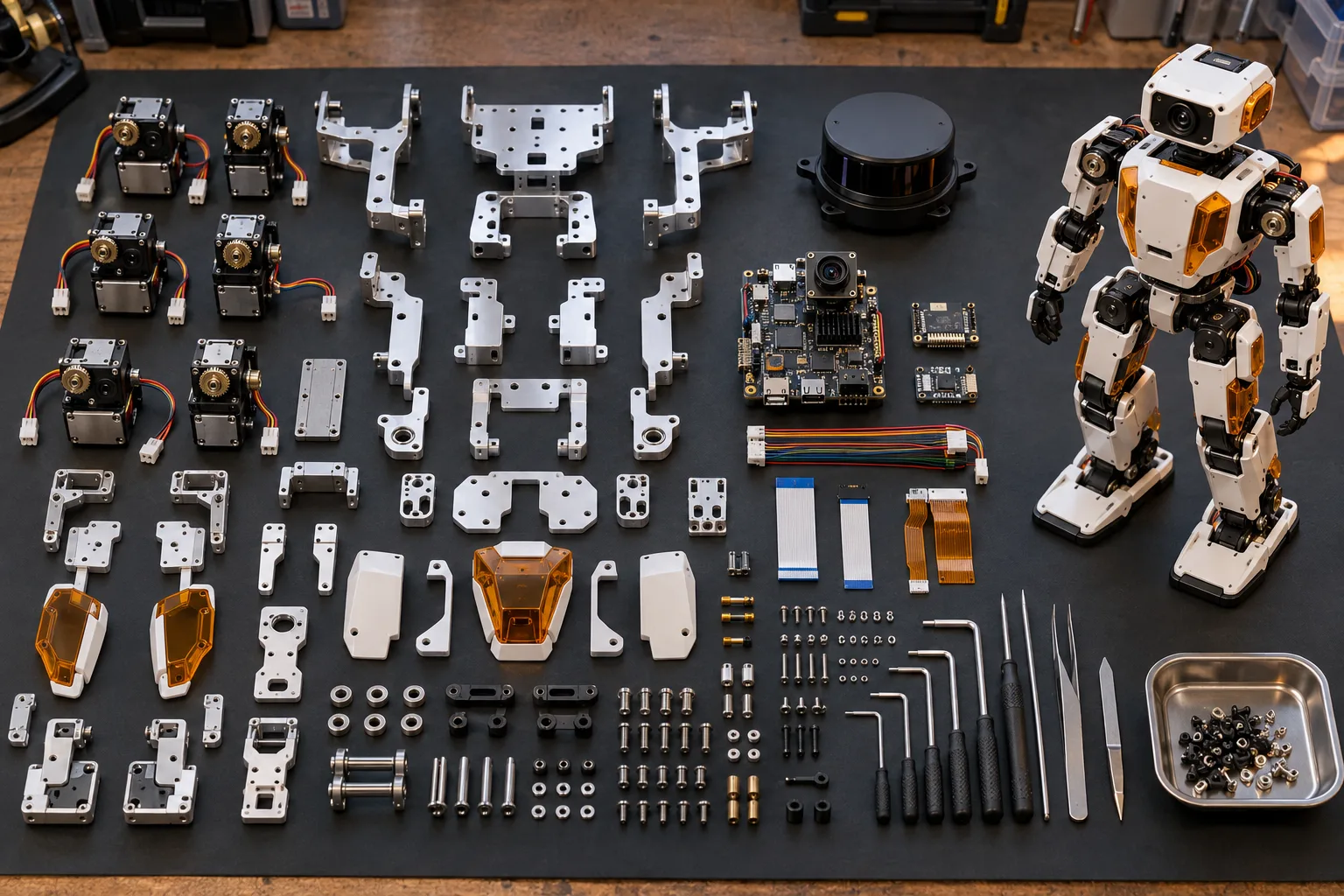
Microduck is an open-source robot, not a sealed product. The Apache-2.0 repositories publish the robot's software, the SDK and the reinforcement-learning environments, which means the DIY path is real: modify it, print for it, train for it, and understand every part of it. If you searched for "microduck diy", "microduck stl" or "microduck replica", this page is the honest map of what you can and cannot build.
What is actually open
-
The robot repositories: the robot's software and everything around it are public on GitHub under Apache-2.0.
-
The SDK: program the robot from Python - motors, sensors, poses, policies.
-
The simulator: the same robot as software, so you can develop without hardware.
-
The training stack: the mjlab-based RL environments behind the seven shipped moves.
-
The community: policies, mods and build questions get shared in the Pollen Robotics Discord.
What that buys you: no black boxes. The walking policy is a file, the reward function that made it is code, and the robot it runs on is documented.
Build vs buy: the honest math
Building a Microduck from scratch is not the cheap route - it is the deep route. Count what a full build involves: 15 motors of the right spec, a camera, a LiDAR, two IMUs, the main board, a battery and charger, the controller, plus the printed and machined structure - before tooling, before spares for the parts you will ruin, and before weekends of assembly and calibration. At $399 for a finished, calibrated robot with the seven moves installed, the pre-order is the shortcut past all of it.
So choose deliberately:
-
Pre-order if you want a working walking robot this year, with support, spares and a colourway.
-
Build (or mod) if the building is the hobby - if you want the project, the learning and the scars.
-
Do both like most makers eventually will: buy the duck, then print for it, mod it and rebuild the parts you want to understand.
The skill ladder
-
Simulator only - drive and train in software, zero hardware risk.
-
SDK scripting - make the robot do things with Python; the documentation starts here.
-
Train a policy - the full reinforcement-learning workflow, sim to robot.
-
Hardware mods - new feet, new shells, extra sensors, a printed stand, rollers.
-
Full build - from the repositories, out. The deepest end of the pool, and a genuinely large project.
Mods people actually do
-
Shell and feet swaps. The visible parts are where personalisation starts - print in your colour, keep the original safe.
-
Prop experiments. The Accessory pack's rollers, ball and NFC tags exist to be combined; the moves already use them.
-
Sensor add-ons. The SDK exposes the robot's state, and the community shares what they have wired up.
-
New policies. The highest-leverage mod is not physical: a retrained policy changes what the robot can do more than any print does - a dance, a faster walk, a recovery trick.
-
Desk furniture. Docks, ramps, obstacles and arenas - the robot's world is as printable as the robot.
On STLs and 3D printing
The repositories and the documentation are the source of truth for what is published, and the Discord is where makers share prints and remixes. If a part is not published yet, asking in the community is the fastest way to find out whether someone has a tested version - and contributing yours back is how open source stays open.
Before you void something
Two honest warnings:
-
Modding is at your own risk. It is open hardware and the community mods freely, but a robot you opened is a robot you support. Keep spares: the Dev pack exists for exactly this reason.
-
Printed parts are not always better parts. The shipped shell is the reference; a print that looks right can still change how the robot balances. Test small, then commit.
Microduck DIY: FAQ
Is Microduck really open source? Yes - Apache-2.0. The robot software, SDK, simulator and RL environments are public.
Can I 3D print a Microduck? The repo and docs define what is published; the community shares tested prints. Printing the whole robot from zero is a serious project, not a weekend.
Do I need a 3D printer to own one? No. Buy the finished robot; print only if and when you want to.
Is building cheaper than $399? Usually not once you count motors, sensors, electronics, spares, tooling and your time. Build for the learning, not the discount.
Can I use my own policies on the real robot? Yes - train in the simulator, deploy onto the hardware, tune for reality. That is the intended loop.
Where do I ask build questions? The Pollen Robotics Discord, where makers and the teams behind the robot answer.
Where to go next
-
How to train Microduck - the RL workflow
-
Microduck simulator - develop before hardware
-
Where to buy Microduck - pre-order, packs and countries
-
Documentation - the full technical map